
Mora County Criminal Court Records
A criminal court record is the case file the court keeps once allegations become a court matter. In Mora County, the file can include the criminal complaint, charge entries, arraignment, bond or release entries, hearing notices, motions, orders, plea, trial result, disposition, judgment and sentence, probation terms, restitution, fines, and appeal entries. The charge itself is only one part of the file. A closer look at the arrest-to-charge path belongs with Mora County arrest records and court charges.
Court level controls where the criminal record sits. District Court is the general-jurisdiction court for felony criminal matters and lower-court appeals. Magistrate Court handles misdemeanor, DWI/DUI, traffic violations, and felony preliminary hearings. Municipal Court can handle petty misdemeanors, DWI/DUI, traffic, and ordinance violations where a municipality is involved, but no official Mora municipal court portal was located in the research. Juvenile criminal matters are handled under separate confidential rules.
Search Mora County Criminal Court Records
Start with New Mexico Case Lookup for public electronic case information. The public disclaimer limits use to individual electronic court record viewing and warns against downloading multiple records per transaction. District and Magistrate case data is also available through the official New Mexico Courts Case Lookup mobile app, which says those court levels are updated daily and current to within 24 hours after data is entered.
- Use the defendant name or case number in New Mexico Case Lookup and confirm the court is a Mora County District or Magistrate Court case.
- Review the case type and docket entries to see whether the matter is felony, misdemeanor, DWI/DUI, traffic, appeal, or preliminary hearing related.
- Read charge entries with care because an accusation is not the same as a conviction or sentence.
- Use re:SearchNM if registered document access is needed and the user profile allows the record type.
- Request the judgment, sentence, order, or certified copy from the clerk or through the New Mexico Courts IPRA form if the public system is not enough.
The Fourth Judicial District Attorney page identifies the prosecutorial district serving San Miguel, Mora, and Guadalupe Counties.
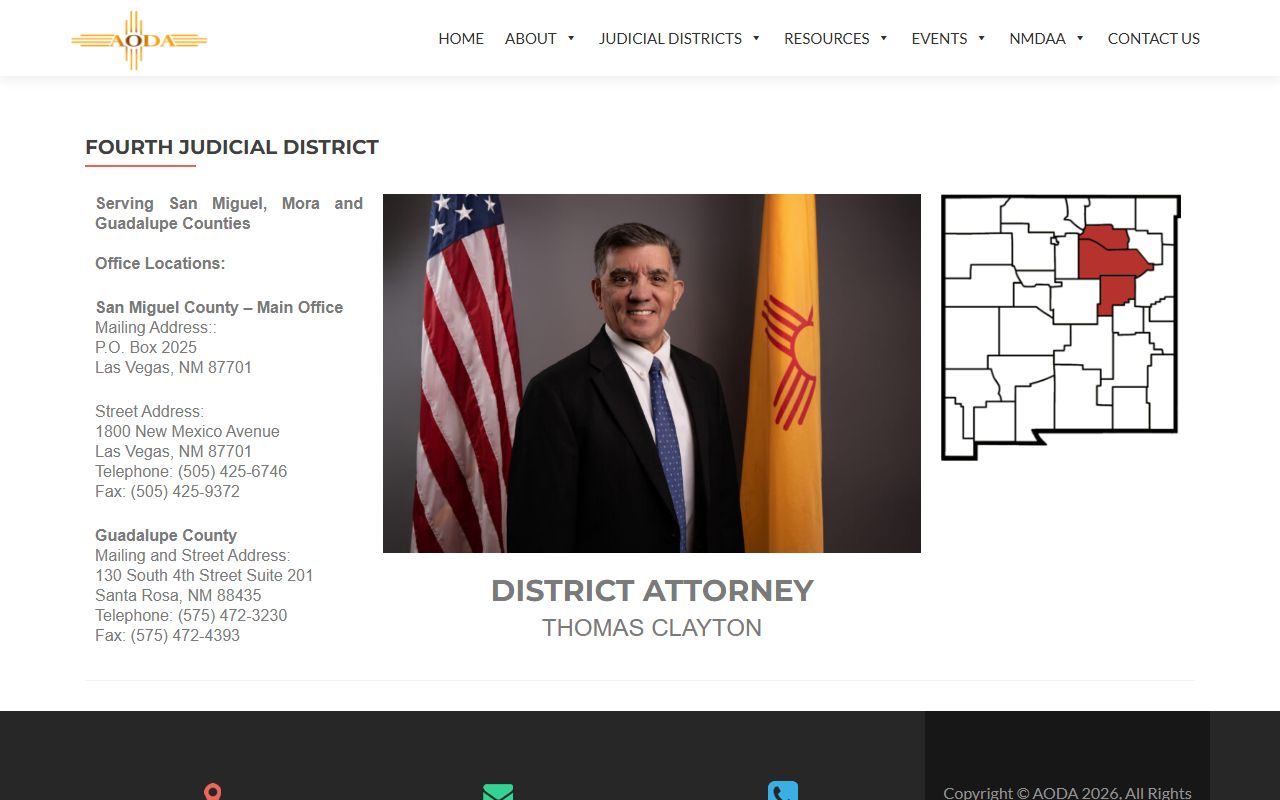
The District Attorney is relevant to criminal filings, but the criminal court record itself is kept through the court system.
Mora County Criminal Case Stages
A Mora County criminal court record grows as the case moves from filing to outcome. The docket can show each major stage, but the full meaning often depends on the document behind the entry. For example, a motion entry shows a request was filed, while the order shows what the judge decided. A judgment and sentence entry is different from an arraignment or bond entry because it records final criminal consequences after a plea or verdict.
Case flow: Charges Filed › Arraignment › Pretrial / Motions › Plea or Trial › Disposition › Sentencing
| Stage | What Happens |
|---|---|
| Charges filed | A criminal complaint, citation, information, or indictment places allegations into the court file. |
| Arraignment | The defendant is advised of the charge and enters a plea such as guilty, not guilty, or no contest. |
| Pretrial / motions | Parties file motions, notices, discovery-related entries, bond issues, continuances, or other requests. |
| Plea or trial | The case resolves through a plea, trial verdict, dismissal, or other court-approved outcome. |
| Disposition | The record states the outcome of a charge or case, such as dismissed, guilty, acquitted, or disposed. |
| Sentencing | The court records jail, prison, probation, fines, costs, restitution, or other ordered terms when applicable. |
What Mora County Criminal Records Show
Official New Mexico court prompts identify criminal complaint and judgment and sentence as criminal case document examples. A Mora County criminal court record may also show the court, case number, defendant, attorney, judge, charges, docket entries, hearings, motions, orders, plea, disposition, sentence, fines, fees, bond, restitution, probation, redactions, and appeal activity. Some entries may be visible online while the document image or certified copy requires a clerk request.
| Field | What It Shows |
|---|---|
| Court | District Court - Mora County, Magistrate Court - Mora County, or another court named on the case. |
| Case number | The Odyssey or court-assigned number needed for lookup and copy requests. |
| Defendant | The person charged in the criminal case, subject to redaction or confidentiality limits. |
| Charges | The alleged offenses as filed or later amended, reduced, dismissed, or resolved. |
| Plea | The defendant's formal answer, such as guilty, not guilty, or no contest. |
| Docket entries | The chronological register of filings, hearings, motions, orders, and other court actions. |
| Disposition | The outcome of the charge or case, including dismissal, conviction, acquittal, or other resolution. |
| Sentence | Jail, prison, probation, fines, costs, restitution, or other terms ordered after conviction when applicable. |
Mora County Charges vs Convictions
A charge is an allegation placed before the court. A conviction is an outcome after a guilty plea, no contest plea accepted by the court, or guilty verdict. Mora County criminal court records can show charges that were later dismissed, amended, reduced, or resolved in a way that did not produce a conviction. That is why a docket entry should be read with the final disposition and judgment, not in isolation.
| Charge | Conviction | |
|---|---|---|
| Meaning | An accusation filed in court | A final criminal finding or plea accepted by the court |
| Where it appears | Complaint, citation, information, indictment, or docket entry | Disposition, judgment and sentence, or final order |
| Can change | Yes, charges may be amended, reduced, dismissed, or dropped | Changes usually require appeal, post-judgment relief, sealing, or expungement process |
| How to verify | Read later docket entries and orders | Request the judgment and sentence or final disposition from the clerk |
Read Mora County Sentences
Disposition means the outcome of a case or charge. Common plain-language outcomes include dismissed, judgment entered, sentenced, transferred, appealed, or sealed. Criminal records may also show a plea, verdict, deferred process, probation term, fine, court cost, restitution, bond issue, or appeal entry. The judgment and sentence is the key criminal document when a conviction and sentence have been entered.
If a docket shows a hearing but no outcome, use the full case record before drawing conclusions. Hearing schedules can be incomplete. A case can have multiple counts with different outcomes, and one count can be dismissed while another ends in a conviction. The certified judgment, sentence, order, or disposition entry controls over a brief calendar line.
Public Access to Mora County Criminal Records
New Mexico IPRA gives every person a right to inspect public records unless a legal exception applies. For Mora County criminal court records, public access usually begins with Case Lookup and may continue through re:SearchNM, the court clerk, or the New Mexico Courts IPRA form. The IPRA form has a Criminal Case Documents option with criminal complaint and judgment and sentence as examples.
New Mexico Courts also make clear that they do not conduct criminal background checks for the public and do not maintain law-enforcement records, motor vehicle driving records, or marriage licenses. A court case record is not a complete criminal-history report. Sheriff's reports, booking records, driver records, federal records, and state repository records may be held by different agencies.
Key access rules: NMSA 1978, Section 14-2-1 supports public inspection, while sealed, juvenile, and expunged records remain limited.
Mora County Criminal Case Offices
The criminal court record is separate from the prosecutor and defense offices, but those offices help explain how a case reaches court. The Fourth Judicial District Attorney serves Mora, San Miguel, and Guadalupe Counties. The New Mexico Law Offices of the Public Defender maintains a statewide office locator for defense representation information. Court records still come from New Mexico Courts, the specific clerk, Case Lookup, re:SearchNM, or IPRA.
The New Mexico Law Offices of the Public Defender office locator is a statewide source for public defender office information.
Defense-office information can help with case context, but it does not replace the clerk as the custodian of criminal court records.
Sealed vs Expunged Criminal Records
Sealing restricts public access by law or court order. Expungement can remove eligible arrest and conviction-related public records from public view after a petition, hearing, and court findings. The New Mexico Courts expungement guide states that state expungement does not apply to tribal or federal records, even when those records are located in New Mexico. Mora County court records and law-enforcement records may require notice to different custodians after an order.
| Sealed | Expunged | |
|---|---|---|
| Public visibility | Restricted from public access | Removed from public view if the court grants relief |
| How it happens | By court order or specific law | By petition, hearing, and statutory findings |
| Common limits | Some authorized parties may still have access | Federal and tribal records are outside New Mexico state expungement |
| Mora County step | Use the court that handled the case | Identify court and case number, then file in the appropriate court |
Restricted Mora County Criminal Records
Juvenile delinquency records are confidential under NMSA 1978, Section 32A-2-32. The restriction covers child records, social records, behavioral-health screenings, diagnostic evaluations, psychiatric and medical reports, local detention records, and supervision histories. Juvenile sealing is addressed by NMSA 1978, Section 32A-2-26. Public search pages should not be treated as access routes for juvenile criminal records.
Other restricted criminal records can include sealed warrants, sealed filings, expunged records, protected victim information, personal identifiers, and material withheld because of a court order or public-access rule. If a criminal case is missing from public search, that does not prove the case never existed. It may be old, non-digitized, misidentified, sealed, expunged, confidential, or held by a different custodian. Broader Mora County court records access rules apply when the criminal file overlaps with civil orders, appeals, or copy requests.
Important: Criminal court records are not the same as FCRA-regulated background reports, sheriff records, jail rosters, or driver histories.